 TLC Children's Trust
 August 17, 2026 · 4 min read
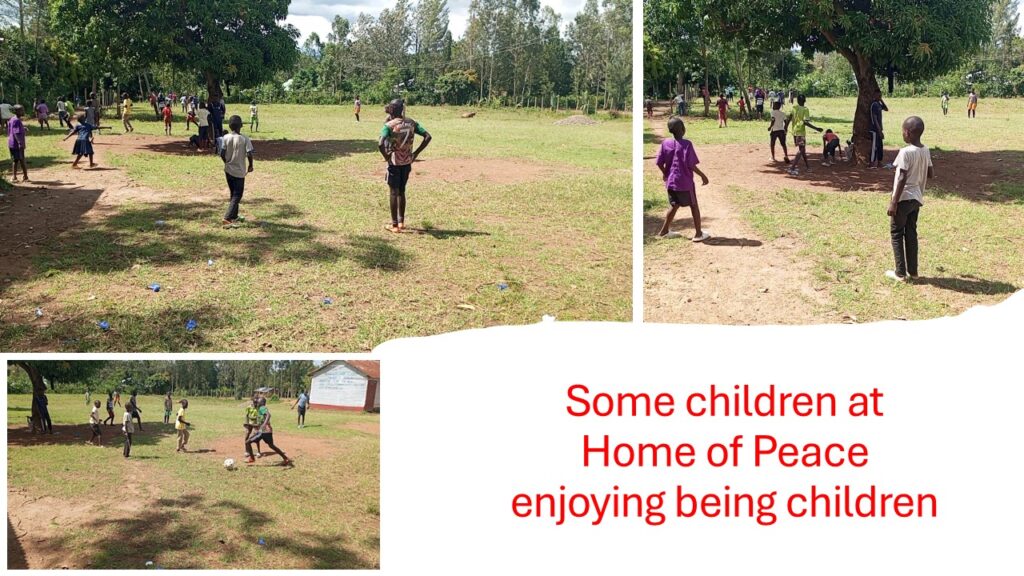
TLC Children’s Trust finances a court-referred children’s home in rural Kenya, where every penny donated reaches the children directly.
A Home Built on a Simple Promise
Fifty-six children currently live at the Home of Peace Children’s Home in rural Kenya. They were placed there by a court. Most arrived with nothing. Some had been living on the streets. According to TLC Children’s Trust, the UK-registered charity that finances the home, many would not have survived much longer without intervention.
That is not rhetorical. Street life in parts of Kenya, particularly for unaccompanied children, carries genuine, documented risks: malnutrition, violence, drug use, exploitation. The charity is direct about what it believes the alternative looks like for the children in its care.
“Without our support, these children would be left to live on the streets and many would no doubt die.”
TLC Children’s Trust was registered with the UK Charity Commission under registration number 1156786. Its stated charitable objects are narrow and specific: “to relieve the needs of orphans and other underprivileged children and young people in Kenya, in particular but not exclusively by the provision of funds for food, clothing, accommodation, education and medical care.”
No scope creep. No mission drift. Just that.
How the Model Works
The Home of Peace is registered with the Kenyan government and sits under the oversight of the country’s Department of Children’s Services, which carries out regular inspections. Children are not self-referred or informally admitted, they arrive through the Children’s Court, which also reviews each child’s placement on a continuing basis. It is a structured, legally accountable arrangement on both sides of the arrangement: the Kenyan regulatory framework governs the home itself, while TLC Children’s Trust oversees operations from the UK and maintains what it describes as daily contact with the site.
That level of monitoring matters for donors. The charity is transparent about one figure in particular: 100% of gifts received goes to the children’s home. Trustees personally cover administrative overheads, meaning no portion of a public donation is absorbed by the charity’s own running costs before it reaches Kenya.
The staff at Home of Peace includes social workers, a qualified community nurse, a pastor, kitchen staff, dormitory staff, and security and grounds personnel. Children receive accommodation, food, clothing, medical care, and education for as long as they need it, up to and including the end of the calendar year in which they turn 18.
What “Care” Actually Means Here
It is easy for charity communications to flatten the reality of what daily life looks like for children in institutional care. The Home of Peace model is not a holding facility. Children stay for years, not weeks. Relationships with staff develop. Educational progress is tracked. Medical needs are addressed.
The charity’s website archives newsletters stretching back to 2017, with updates published as recently as August 2026. Titles like “Encouraging Report from Home of Peace” and “See the Incredible Difference You Are Making in Kenya” suggest a consistent effort to keep supporters informed, not just at fundraising moments, but across the full calendar.
The children remain at the home until they age out at 18. The intention, as the charity frames it, is to put each child on “a path towards a useful, productive life”, which requires more than a roof. It requires stability over time, something most of the children in the home have never previously experienced.
The Funding Reality
Running a residential children’s home, staffed, inspected, legally compliant, and genuinely operational, is not cheap. Fifty-six children is not a small cohort. Salaries, food, utilities, medical supplies, school fees: the costs are ongoing and largely non-negotiable.
TLC Children’s Trust is not a large organisation. It relies on public donations, and the trustees’ decision to absorb overhead costs personally rather than draw them from the donation pool is an unusual commitment, one that directly increases the impact of every pound given.
For UK taxpayers, Gift Aid offers an additional mechanism, the charity’s website lists it as an option, meaning basic-rate taxpayers can increase the value of donations by 25% at no extra cost to themselves.
A Long Record, a Continuing Need
The charity has been operating long enough to have a track record. A decade of newsletters, Kenyan government registration, UK Charity Commission accountability, court-referred children, and a staffed, inspected home on the ground, these are not the hallmarks of a casual operation.
What TLC Children’s Trust lacks is scale. Fifty-six children is fifty-six lives genuinely changed. It is also, by any measure, a fraction of the children who need exactly this kind of support across Kenya.
The charity is not asking anyone to solve that problem alone. It is asking for enough to keep the lights on, the staff paid, and the children fed, one month at a time.